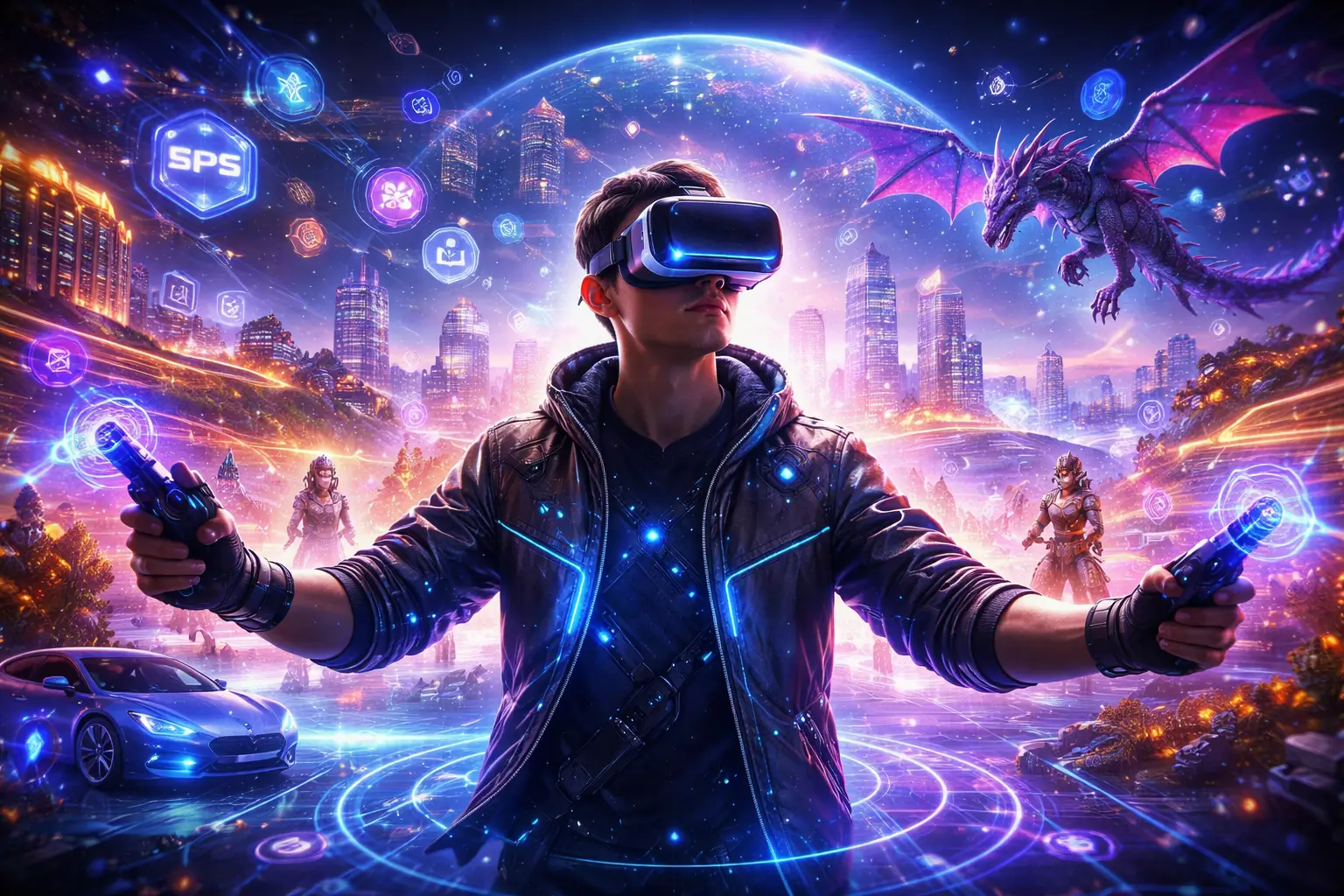
The gaming industry is entering a transformative era where virtual reality (VR) and the metaverse are converging to create immersive, persistent digital worlds. No longer limited to screens, gaming is evolving into fully interactive environments where players can socialize, trade, and experience digital life in real time.
For developers, investors, and gamers alike, metaverse and VR gaming represent one of the most significant shifts in the future of entertainment and digital economies.
What Is Metaverse Gaming?
Metaverse gaming refers to shared, persistent virtual worlds where players interact with each other, digital assets, and environments in real time. Unlike traditional games, the metaverse is not confined to a single title—it is an interconnected ecosystem.
Key characteristics include:
- Persistent virtual environments
- Real-time social interaction
- User-generated content
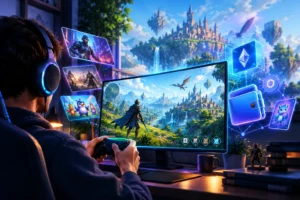
- Digital ownership through blockchain
These worlds often extend beyond gaming into areas like commerce, events, and digital identity.
In simple terms:
The metaverse turns gaming into a living, evolving digital universe.
The Role of Virtual Reality (VR)
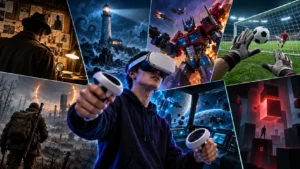
Virtual Reality is the technology that makes the metaverse truly immersive. By using VR headsets, players can step inside digital environments rather than just viewing them on a screen.
Key Features of VR Gaming
- 360-degree environments
- Motion tracking and hand interaction
- Realistic physics and spatial awareness
- Deep immersion and presence
Modern VR systems are becoming lighter, more powerful, and increasingly accessible—driving wider adoption across the gaming community.
Impact:
VR transforms passive gameplay into active participation.
How Metaverse and VR Are Changing Gaming
1. From Gameplay to Experience
Traditional games focus on objectives and mechanics. In contrast, metaverse games emphasize experiences—social interaction, exploration, and creativity.
Players can:
- Attend virtual concerts
- Build digital environments
- Host events and communities
2. True Digital Ownership
With blockchain integration, players can own assets such as:
- Virtual land
- Avatars and skins
- In-game items
These assets are often represented as NFTs, allowing them to be traded across platforms.
3. Social and Economic Ecosystems
Metaverse platforms are evolving into digital economies, where players can earn, trade, and invest.
This includes:
- Play-to-earn (P2E) models
- Creator economies
- Virtual marketplaces
GameFi connection:
Metaverse gaming is a key driver of the GameFi ecosystem, merging entertainment with finance.
Real-World Applications Beyond Gaming
The metaverse is not limited to entertainment. It is expanding into multiple industries, including:
- Education: Virtual classrooms and training simulations
- Business: Remote collaboration and virtual offices
- Retail: Digital storefronts and virtual shopping
- Events: Conferences, concerts, and exhibitions
Key insight:
Gaming is just the entry point—the metaverse is a broader digital transformation.
Market Growth and Industry Momentum
The global metaverse and VR gaming market is experiencing rapid growth, driven by advancements in hardware, increasing internet speeds, and rising interest in immersive experiences.
Major technology companies and gaming studios are investing heavily in:
- VR hardware development
- Metaverse platforms
- Blockchain integration
This momentum indicates that metaverse gaming is moving from experimental to mainstream.
Challenges Facing Metaverse and VR Gaming
Despite its potential, the industry still faces several challenges:
High Hardware Costs
VR headsets and compatible systems can be expensive, limiting accessibility.
Technical Limitations
Issues such as motion sickness, battery life, and processing power still need improvement.
Fragmentation
Different platforms operate in silos, limiting interoperability between virtual worlds.
Regulatory and Privacy Concerns
As digital economies grow, questions around data privacy, ownership rights, and regulation become more complex.
Professional perspective:
Overcoming these challenges will be critical for long-term adoption.
The Future of Metaverse and VR Gaming
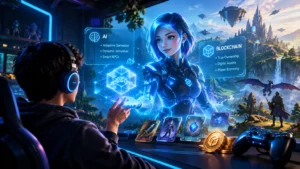
The next phase of gaming will likely be defined by deeper integration between VR, AI, blockchain, and cloud computing.
Emerging Trends
1. Hyper-Realistic Virtual Worlds
Advancements in graphics and AI will create more lifelike environments.
2. Cross-Platform Metaverse Ecosystems
Players will move seamlessly between different virtual worlds.
3. AI-Driven Interactions
NPCs and environments will become more intelligent and responsive.
4. Mainstream Adoption
As hardware becomes more affordable, VR gaming will reach a broader audience.
Why It Matters for Professionals
For industry professionals, metaverse and VR gaming present significant opportunities:
- Developers: Build immersive, scalable experiences
- Investors: Identify high-growth platforms and technologies
- Content Creators: Monetize virtual assets and experiences
- Gamers: Participate in evolving digital economies
Strategic takeaway:
Understanding this space early provides a competitive advantage in a rapidly evolving industry.
Key Takeaways
- Metaverse gaming creates persistent, interactive virtual worlds
- VR enhances immersion and player engagement
- Blockchain enables true ownership and digital economies
- The industry is growing rapidly despite current challenges
- The future of gaming lies in immersive, interconnected ecosystems
Final Thoughts
Metaverse and VR gaming are not just trends—they are the foundation of the next generation of digital interaction. As technology continues to evolve, the line between physical and virtual worlds will blur, creating new opportunities for innovation, creativity, and economic participation.
For anyone involved in gaming or digital finance, the message is clear:
the future of play is immersive, decentralized, and limitless.
Stay connected with GameFi Times for the latest insights, trends, and analysis shaping the future of gaming and Web3 innovation.