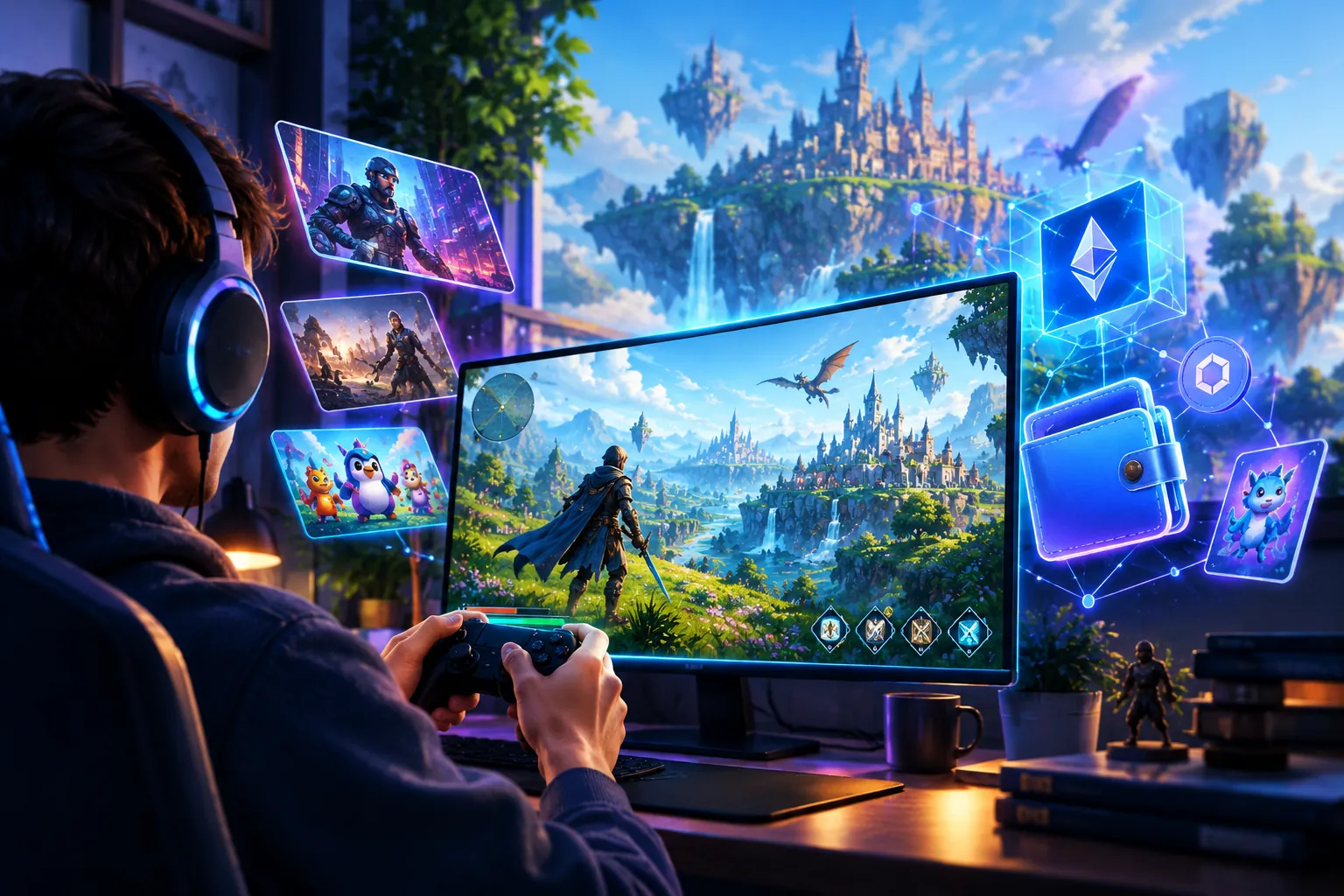
Strip away the tokens, the NFTs, and the wallet pop-ups from most 2021-era blockchain games, and there’s usually nothing left worth playing. That’s the uncomfortable truth the industry spent years avoiding. But a new generation of gameplay-first Web3 games is flipping that script entirely, building titles that would hold up as genuinely fun experiences even if you deleted the blockchain layer completely. This isn’t a small tweak, it’s the same fundamental shift we explored in our piece on how GameFi is reshaping the future of gaming, and it might be the single biggest reason Web3 gaming is finally starting to earn real credibility again.
What Gameplay-First Web3 Games Actually Means
The idea is simple, even if the industry took years to figure it out. A gameplay-first Web3 game is one where the core loop, the shooting, the strategy, the deck-building, the racing, is genuinely enjoyable on its own merits, with the blockchain layer sitting quietly underneath as infrastructure rather than the entire point. Compare that to the old model, where the “game” was often just a thin wrapper around a token faucet, and the difference is night and day. Players show up for gameplay-first titles because they’re fun. They stick around for the ownership and earning potential as a bonus, not the other way around.
Real Examples of Gameplay-First Web3 Games Winning Right Now
Off The Grid, the cyberpunk battle royale from Gunzilla Games, is probably the clearest proof of concept in the space right now. It became the first Web3 title to launch on PlayStation 5 and later on Steam, two platforms with historically strict rules around blockchain and NFT content, and it did that by treating NFT ownership as entirely optional. Players can jump in, play competitive matches with 60 people per lobby, and never touch a wallet if they don’t want to. Gods Unchained tells a similar story on the trading card side: it plays like a legitimate strategy card game first, with on-chain ownership layered in afterward rather than baked into the core mechanic. Before investing time or money into any blockchain game, though, it’s worth applying the same scrutiny we outline in our guide to evaluating gaming projects before investing, since not every project claiming to be gameplay-first actually backs that claim up with a real, functional game.
Why Gameplay-First Web3 Games Are Outlasting the Old Model
The math behind the old play-to-earn model was always fragile. When a game’s only real draw is the reward loop, the moment token prices drop or new player growth slows, there’s nothing left holding the community together. Gameplay-first Web3 games don’t have that single point of failure. If the token value dips, people still log in, because the game itself is still worth playing. Pudgy Party is a good recent example outside the AAA space: a mobile battle royale with no standalone token at all, built purely around fun, familiar mechanics, and it still managed roughly 500,000 downloads within its first two weeks. That’s not a crypto success story. It’s a game design success story that happens to live on-chain.
What This Shift Means for Players and Investors
For players, this is mostly good news. It means fewer half-finished projects riding on hype alone, and more titles you can actually enjoy without needing a crypto wallet on day one. For investors, gameplay-first design is quickly becoming one of the clearest signals separating serious studios from short-term cash grabs. A team willing to build a real, standalone game rather than a token-first shell is making a much bigger bet on their own product, and that kind of commitment tends to show up in retention numbers long before it shows up in token price.
The Bottom Line on Gameplay-First Web3 Games
The industry spent years treating blockchain as the headline feature, and that approach nearly sank the entire category. The projects surviving into 2026 have quietly reversed that priority, and even platform gatekeepers are starting to notice. As CCN reported, Steam has begun cautiously listing Web3 titles again after years of an effective ban, specifically favoring games with optional or scaled-back blockchain features rather than crypto-mandatory ones. That’s about as strong a signal as the industry could ask for: gameplay-first Web3 games aren’t just surviving, they’re the reason the whole category is being allowed back into the room.
Quick FAQ
What makes a Web3 game “gameplay-first”?
A gameplay-first Web3 game remains fun and playable even if you removed its tokens and NFTs entirely. The blockchain layer supports the game rather than being the main reason to play it.
Are gameplay-first Web3 games still profitable for players?
Some are, through optional NFT ownership and in-game economies, but earning potential is treated as a bonus rather than the core reason to play, which tends to make those economies more stable long-term.