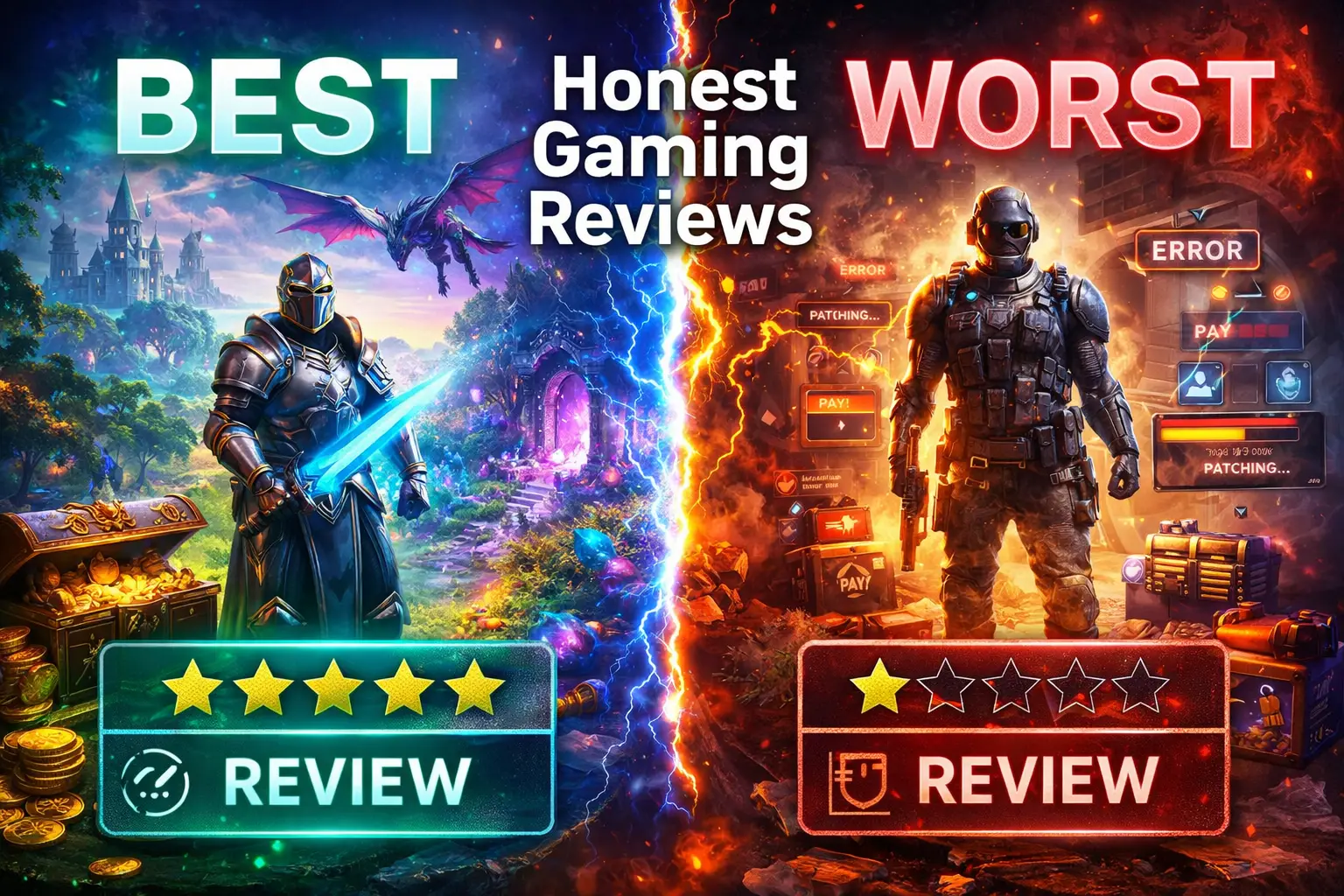
Gaming reviews are often filled with excitement, polished trailers, and launch-day hype. But honest gaming reviews do something different — they tell the truth. They show players which games are truly worth buying and which ones look good in marketing but disappoint once you start playing. In a world where gamers spend real money and valuable time on new releases, honesty matters.
Right now, the gaming market is full of extremes. Some titles offer polished gameplay, rich worlds, and memorable moments. Others launch unfinished, full of bugs, weak mechanics, or shallow content. That is why gamers need clear, balanced reviews more than ever.
Let’s take a closer look at what separates the best games from the worst ones right now.
What makes a game one of the best?
The best games do more than entertain for a few hours. They create an experience that feels complete, satisfying, and worth returning to. They often succeed in a few key areas.
First, the gameplay feels polished. Controls are responsive, mechanics are well-designed, and the game feels rewarding to play. Whether it is combat, driving, exploration, or puzzle-solving, strong core gameplay is what keeps players engaged.
Second, the game respects the player’s time. It does not rely too heavily on unnecessary grinding, repetitive missions, or pointless filler. The best games understand pacing and deliver content that feels meaningful.
Third, the technical performance is solid. A game does not need to be perfect, but it should run well enough to let players enjoy the experience without constant bugs, crashes, or performance issues.
Finally, the best games usually have a strong identity. They know what they want to be. Some focus on story, others on competitive action, and others on creativity or exploration. Great games commit to their vision and execute it well.
What makes a game one of the worst?
The worst games usually fail in ways that are impossible to ignore. Sometimes the problem is broken performance. Other times it is boring gameplay, poor balance, lazy design, or aggressive monetization.
One common issue is releasing too early. Some games launch with promise but clearly needed more development time. Players are left dealing with broken systems, missing features, and patches that come too late.
Another major problem is style without substance. A game may have beautiful graphics and flashy trailers, but if the missions are repetitive and the gameplay feels empty, players quickly lose interest.
Monetization is another reason some games earn negative reviews. When progress feels locked behind purchases, or when cosmetic shops become more polished than the actual gameplay, players notice. Honest reviews should always call this out.
And then there are games that simply fail to understand their audience. A franchise may abandon what made it popular, or a new title may try to copy trends without offering anything fresh. In both cases, the result often feels forgettable.
Why honest reviews are important
Many players do not buy every new release. They choose carefully. Honest gaming reviews help people avoid disappointment. A trustworthy review does not blindly praise a game because it is popular, and it does not attack a game unfairly just because expectations were high. Instead, it looks at the full picture.
An honest review should answer questions like these:
- Is the game fun after the first few hours?
- Does it feel finished?
- Is it worth the price?
- Who will enjoy it most?
- What problems should players know before buying?
These are the questions that matter most to real gamers.
The danger of hype
Hype can make almost any game seem amazing before launch. Cinematic trailers, influencer previews, and pre-release promises often build huge expectations. But once the game is in players’ hands, reality sets in.
That is why honest post-launch reviews are so valuable. They are based on real gameplay, real performance, and real player experience. They help cut through the noise and reveal whether a game truly delivers.
Best and worst does not mean the same for everyone
It is also important to remember that gaming is personal. One player may love a slow, story-rich RPG, while another prefers fast multiplayer action. One gamer may enjoy a difficult survival game, while another finds it frustrating. Honest reviews should recognize this.
The goal is not to claim that every game is universally good or bad. The goal is to explain clearly what works, what does not, and what kind of player the game is made for.
Final thoughts
The best games right now are the ones that combine vision, polish, and player respect. The worst are usually the ones that overpromise, underdeliver, and rely too much on hype. Honest gaming reviews help players see the difference.
In today’s crowded gaming world, truth matters more than excitement. A good review should not just convince someone to buy a game. It should help them decide whether that game is actually right for them.