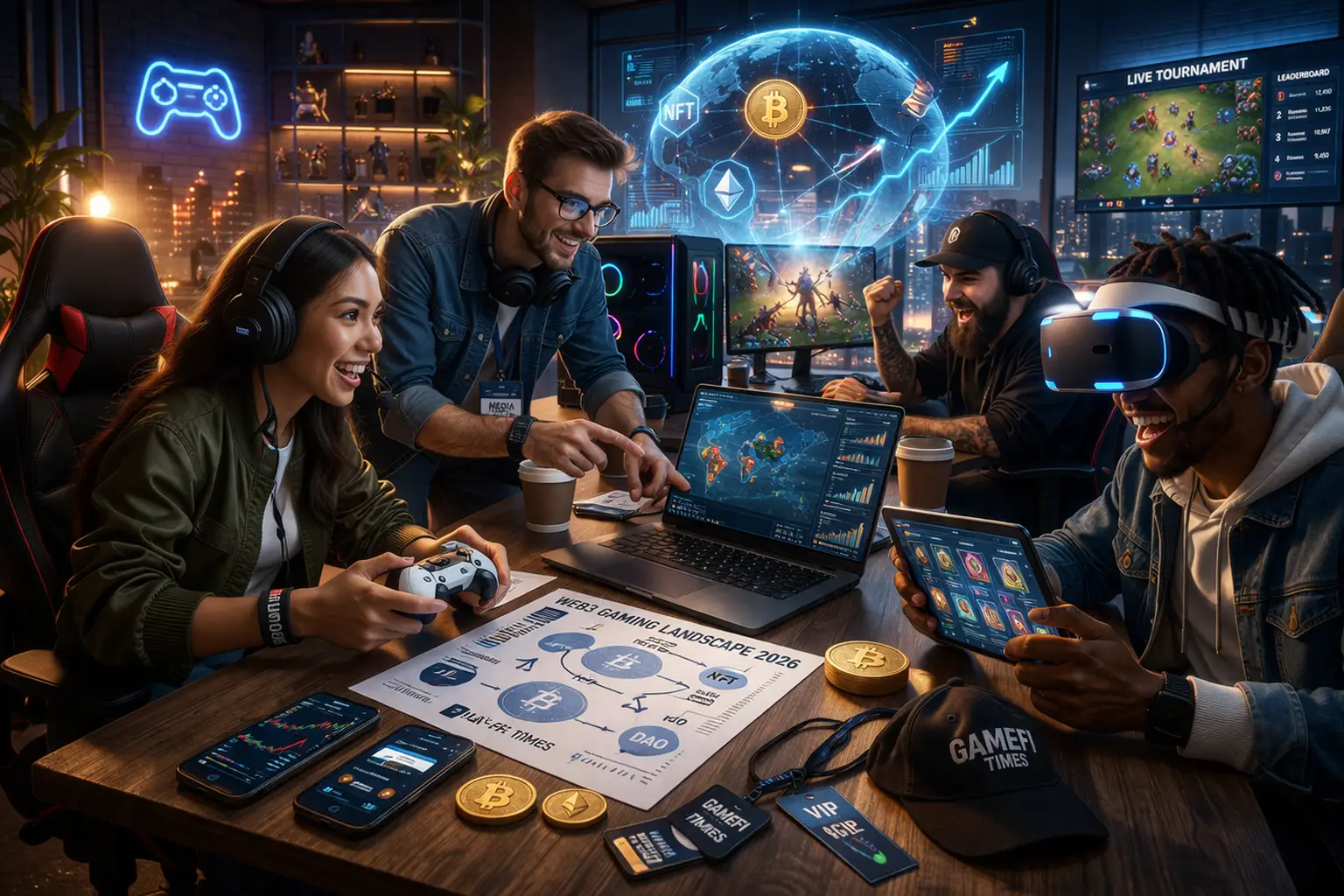
The gaming industry is no longer just about entertainment—it’s a rapidly evolving ecosystem powered by blockchain, decentralized finance, and immersive technologies. For professionals operating in GameFi, Web3 gaming, or digital asset markets, staying informed is not optional—it’s a competitive necessity.
This guide explores key expert insights, emerging trends, and strategic knowledge every professional should understand to stay ahead in 2026 and beyond.
Understanding the Evolution of GameFi
GameFi—short for “Game Finance”—combines gaming, blockchain, and decentralized finance to create economies where players can earn real-world value. Unlike traditional games, players own in-game assets as NFTs and can trade or monetize them freely.
This shift has fundamentally changed the relationship between developers and players, introducing transparency and ownership into digital ecosystems.
More importantly, the industry is experiencing rapid growth. The global GameFi market is projected to reach nearly $30 billion in 2026, with long-term forecasts exceeding $250 billion by 2035.
Takeaway for professionals:
GameFi is not a niche—it’s becoming a core pillar of the global gaming economy.
From Play-to-Earn to Play-and-Earn
One of the most critical industry shifts is the transition from Play-to-Earn (P2E) to Play-and-Earn models.
Earlier GameFi projects focused heavily on financial rewards, often at the expense of gameplay quality. Today, the focus has shifted toward sustainable engagement and enjoyable gameplay, where earning is a secondary benefit—not the primary driver.
Why this matters:
- Improves player retention
- Reduces token inflation issues
- Builds long-term ecosystems
Professionals should prioritize projects that balance fun, utility, and economic sustainability.
The Rise of Digital Ownership and NFTs
NFTs are at the heart of Web3 gaming. They enable true ownership of in-game assets—something impossible in traditional gaming models.
Players can:
- Trade items across marketplaces
- Transfer assets between games
- Monetize digital ownership
This has led to massive on-chain activity, with millions of active wallets and significant NFT trading volume in gaming ecosystems.
Professional insight:
Understanding NFT utility—not just hype—is key to evaluating GameFi projects.
Cross-Platform and Interoperability Trends
Modern gamers expect seamless experiences across devices and platforms. As a result, cross-platform gaming and interoperability are becoming industry standards.
GameFi projects are increasingly:
- Supporting multiple devices (PC, console, mobile)
- Enabling asset transfers across ecosystems
- Building interconnected gaming environments
This trend is further amplified by the growth of the metaverse, where virtual assets and identities move freely between worlds.
Strategic advantage:
Professionals who understand interoperability will be better positioned to identify scalable, future-proof projects.
Investment Trends and Market Dynamics
GameFi remains one of the most dynamic sectors within Web3, despite market volatility.
While the industry experienced downturns in previous years, it is now entering a more mature phase, characterized by:
- Institutional investment
- Regulatory developments
- Integration of stablecoins and secure systems
Additionally, global adoption is expanding rapidly, with Asia-Pacific emerging as the fastest-growing region due to a strong gaming culture and increasing blockchain adoption.
Key insight for investors and professionals:
- Focus on fundamentals over hype
- Analyze tokenomics, user growth, and utility
The Importance of Data-Driven Decision Making
In today’s competitive landscape, intuition is no longer enough. Professionals must rely on data, analytics, and market intelligence.
Key metrics to monitor:
- Daily active users (DAU)
- Token utility and circulation
- NFT trading volume
- Community engagement
For example, blockchain gaming continues to dominate Web3 activity, maintaining millions of active users even during market downturns.
Actionable takeaway:
Use data to validate opportunities—not narratives.
Risk Management and Regulatory Awareness
As the GameFi ecosystem grows, so do its risks. These include:
- Regulatory uncertainty
- Market volatility
- Security vulnerabilities
Professionals must stay informed about:
- Regional regulations
- Compliance requirements
- Platform security standards
Best practice:
Always assess risk alongside opportunity—especially in high-growth sectors like Web3 gaming.
Final Thoughts: Staying Ahead in GameFi
The future of gaming is being reshaped by blockchain, digital ownership, and decentralized economies. For professionals, success depends on continuous learning, strategic thinking, and adaptability.
Key takeaways:
- GameFi is rapidly scaling into a multi-billion-dollar industry
- Sustainable models are replacing short-term earning schemes
- NFTs and interoperability are redefining ownership and gameplay
- Data-driven strategies are essential for long-term success
In a space where innovation moves fast, the real advantage lies in understanding not just what’s trending—but what’s sustainable.