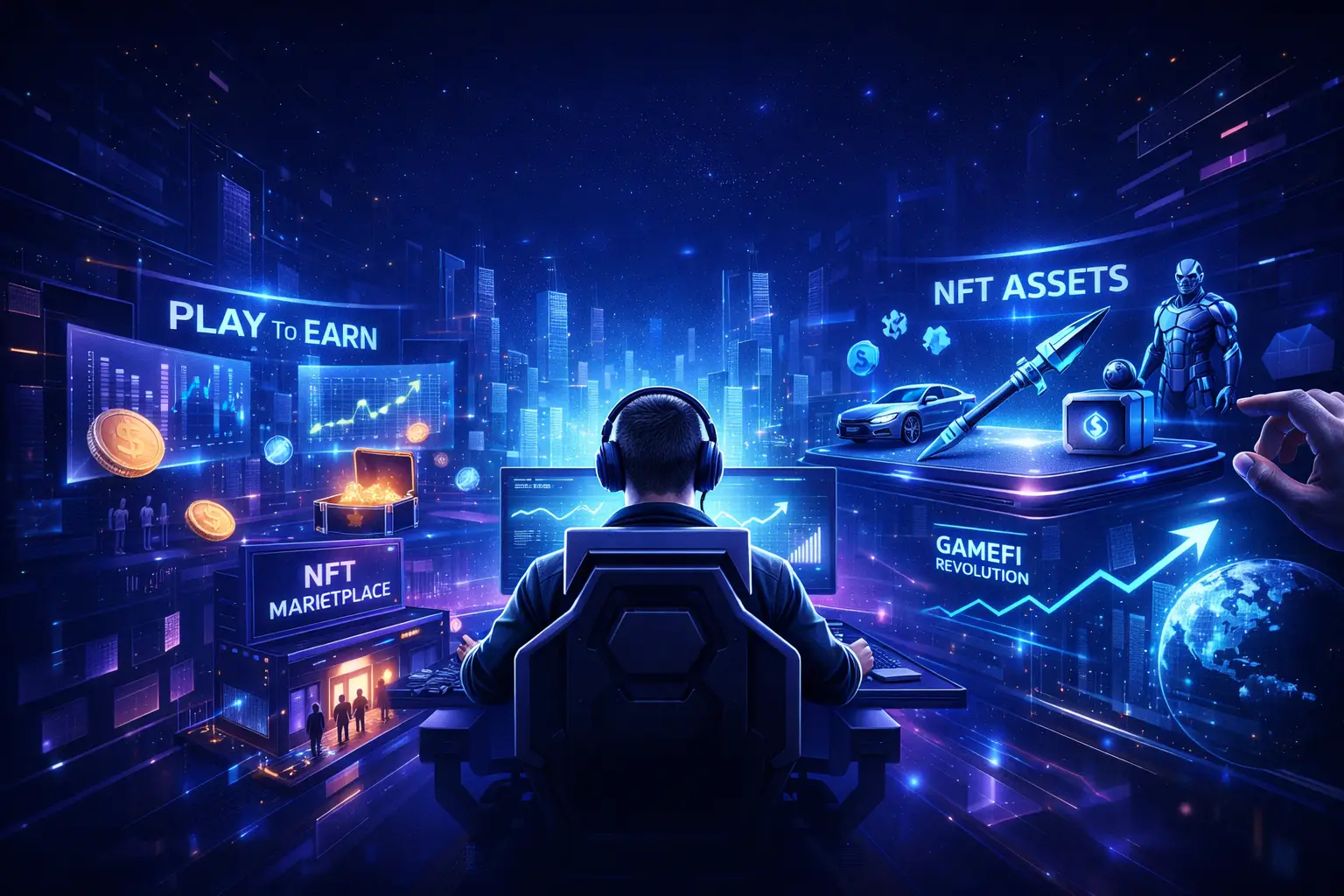
The gaming industry is undergoing a massive transformation—and at the center of it is GameFi. By combining blockchain technology, decentralized finance (DeFi), and immersive gameplay, GameFi is redefining how players interact with games, earn rewards, and own digital assets.
What was once just entertainment is now evolving into a player-driven digital economy.
Let’s explore how GameFi is reshaping the future of gaming.
What is GameFi?
GameFi (short for Game Finance) refers to blockchain-based games that allow players to:
- Earn real-world value through gameplay
- Own in-game assets as NFTs
- Participate in decentralized ecosystems
Unlike traditional games, where all assets are controlled by developers, GameFi gives true ownership and financial opportunities to players.
1. True Ownership of Digital Assets
In traditional gaming:
- You don’t truly own your skins, weapons, or characters
- Assets are locked within the game ecosystem
GameFi changes this by using blockchain technology:
- Assets are minted as NFTs
- Players can buy, sell, or trade them freely
- Ownership is transparent and secure
This creates a player-first economy where time and effort have real value.
2. Play-and-Earn Revolution
GameFi is moving beyond the old Play-to-Earn (P2E) model into a more sustainable Play-and-Earn system.
What’s changing?
- Games focus on fun first, rewards second
- Earnings are balanced and long-term
- Players are rewarded without breaking the economy
This shift is helping GameFi become more appealing to mainstream gamers.
3. Decentralized Gaming Economies
GameFi introduces decentralized economies where:
- Players influence market dynamics
- In-game currencies have real-world value
- Governance tokens allow players to vote on decisions
This turns players into stakeholders, not just users.
4. Interoperability Across Games
One of the most exciting changes GameFi brings is interoperability.
In the future, players may:
- Use the same character across multiple games
- Transfer assets between platforms
- Build a unified gaming identity
This breaks the traditional barriers between games and creates a connected gaming universe.
5. Integration with Metaverse and Virtual Worlds
GameFi is closely linked with the rise of the metaverse.
Players can:
- Own virtual land
- Build digital businesses
- Socialize and earn within virtual environments
Gaming is no longer just about playing—it’s about living in digital worlds.
6. New Revenue Opportunities for Players
GameFi is opening new income streams:
- Earning tokens through gameplay
- Renting or selling NFTs
- Participating in staking and yield farming
For many, gaming is becoming more than a hobby—it’s a side hustle or even a full-time income source.
7. Empowering Game Developers
GameFi isn’t just beneficial for players—it’s also transforming development.
Developers can:
- Raise funds through token sales
- Build community-driven ecosystems
- Monetize games beyond traditional models
This leads to more innovation and independent game creation.
8. Improved Transparency and Security
Blockchain technology ensures:
- Transparent transactions
- Secure ownership records
- Reduced fraud and cheating
Players can trust the system more than ever before.
9. Challenges Still Exist
Despite its potential, GameFi faces some challenges:
- High entry barriers for new users
- Volatility of in-game tokens
- Regulatory uncertainty
- Scalability issues
However, ongoing innovation is addressing these problems step by step.
10. The Road Ahead
The future of GameFi looks promising as:
- AAA-quality blockchain games are emerging
- Big gaming studios are exploring Web3
- User experience is improving rapidly
As technology evolves, GameFi could become a mainstream part of the global gaming industry.
Final Thoughts
GameFi is not just a trend—it’s a fundamental shift in how games are played, owned, and monetized.
By empowering players with ownership, financial opportunities, and control, GameFi is reshaping gaming into a more open and rewarding ecosystem.
The question is no longer if GameFi will impact the industry—
but how fast it will redefine it.