Nintendo delivered stronger-than-expected financial results for its fiscal first quarter, reporting revenue and profit that exceeded market expectations even as Nintendo Switch 2 sales slowed sharply compared with the console’s launch period a year earlier.
The Japanese gaming giant posted robust earnings driven by software sales, first-party titles and continued strength across its entertainment business. While hardware shipments declined from the record launch pace established during the previous year, management maintained its full-year financial guidance, signaling confidence in long-term demand for the Nintendo Switch 2 ecosystem.
Revenue and Profit Outperform Expectations
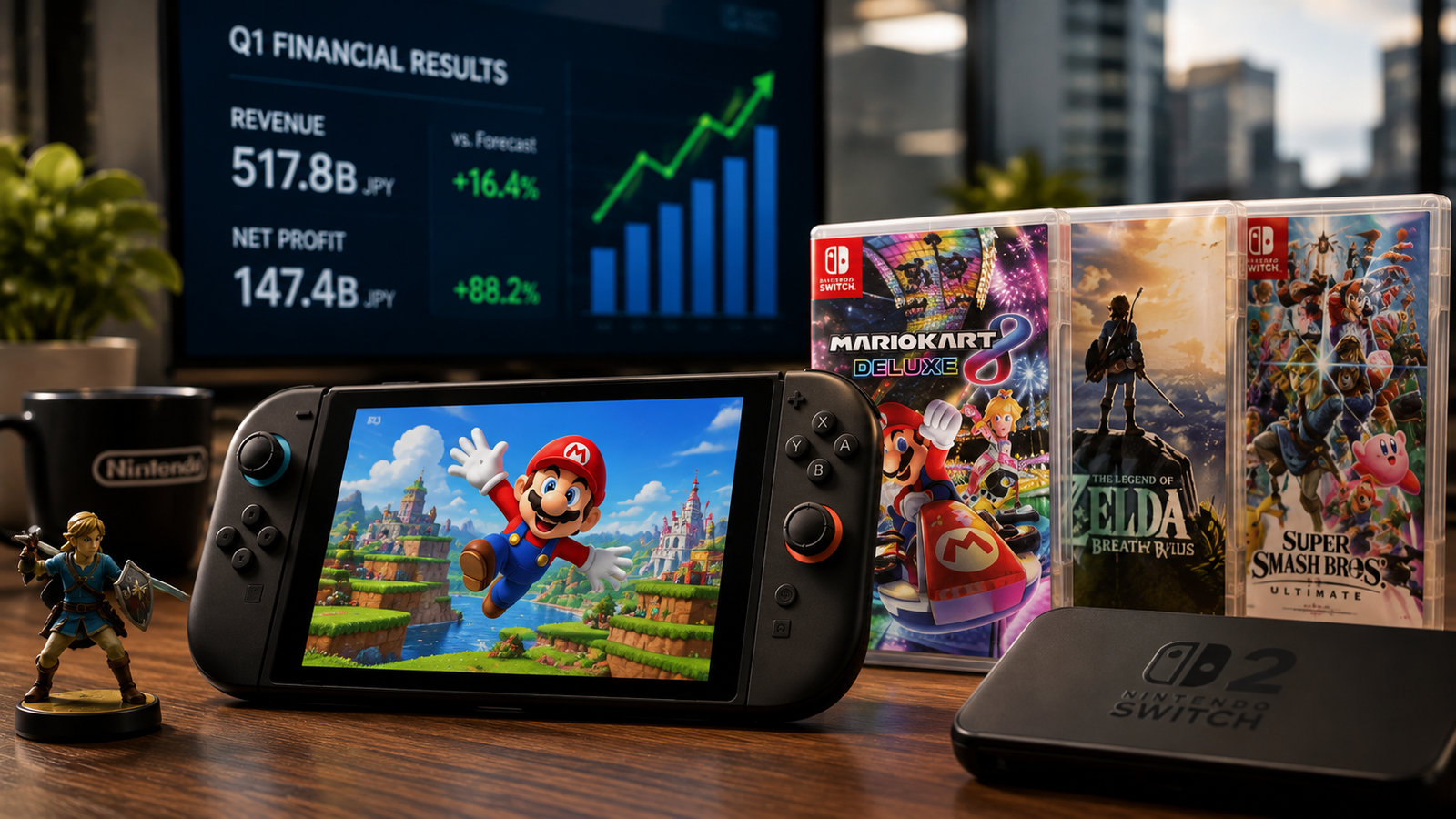
For the quarter ended June 30, Nintendo reported revenue of 517.8 billion yen (approximately $3.28 billion), comfortably ahead of analyst expectations of 444.96 billion yen.
Net profit reached 147.4 billion yen, substantially exceeding consensus estimates of 78.3 billion yen.
The results reflect Nintendo’s continued ability to generate strong profitability despite slower Nintendo Switch 2 sales, thanks to its portfolio of exclusive software franchises, digital sales and expanding entertainment business.
The company also reaffirmed its fiscal year forecast ending March 2027, keeping projected annual revenue at 2.05 trillion yen.
Nintendo Switch 2 Sales Normalize After Launch Surge
Hardware sales naturally slowed after the exceptional launch momentum experienced during the Switch 2’s first year.
Nintendo reported sales of 3.82 million Switch 2 consoles during the quarter, representing a 34.4% year-over-year decline.
Meanwhile, the original Nintendo Switch continued its gradual transition toward the end of its lifecycle, selling 660,000 units, down 31.8% from the same period last year.
Although the year-over-year comparison appears significant, analysts generally expected hardware demand to moderate following the launch period, making software performance increasingly important for Nintendo’s earnings.
First-Party Games Continue to Drive Growth
Nintendo’s software portfolio remained a major contributor to quarterly performance.
Among the standout releases:
- Tomodachi Life: Living the Dream sold 7.94 million copies.
- Pokémon Pokopia reached 1.27 million units sold.
Strong first-party software has long been one of Nintendo’s competitive advantages, helping support Nintendo Switch 2 sales even as hardware demand naturally slows.
The continued popularity of Nintendo’s exclusive franchises also strengthens the broader Switch ecosystem by encouraging player engagement and digital purchases.
Rising Costs Create New Challenges
Like many technology companies, Nintendo continues managing higher component costs.
Management previously indicated that rising memory chip prices, together with global tariff impacts, could increase annual expenses by approximately 100 billion yen.
To offset those pressures, Nintendo has adjusted hardware pricing in several markets.
The company raised Switch 2 prices in Japan earlier this year and plans to increase the U.S. retail price from $450 to $500 beginning September 1.
The pricing strategy reflects broader cost inflation, although Nintendo expects Nintendo Switch 2 sales to remain healthy over the long term
Nintendo Expands Beyond Gaming
Nintendo’s intellectual property continues generating substantial revenue outside traditional video games.
The company reported that The Super Mario Galaxy Movie has surpassed $1 billion in worldwide box office revenue since its theatrical release in April, making it one of the most successful video game adaptations ever produced.
The success demonstrates Nintendo’s expanding entertainment strategy, which now spans films, merchandise, theme parks and licensing alongside its core gaming business.
This diversification provides additional revenue streams while also strengthening the Nintendo brand, which could positively influence Nintendo Switch 2 sales.
What It Means for the Gaming Industry
Nintendo’s latest results show that Nintendo Switch 2 sales remain important, but software and intellectual property now play an even bigger role in long-term profitability.
Although console launches often generate record unit shipments, publishers typically benefit from recurring software purchases, downloadable content, subscription services and broader franchise expansion throughout the console lifecycle.
Nintendo’s ability to exceed expectations despite weaker hardware shipments underscores the resilience of this business model.
For developers, publishers and investors, the results also reinforce the value of owning globally recognized gaming franchises capable of generating revenue across multiple entertainment platforms.
Outlook
While Nintendo Switch 2 sales have naturally moderated following the console’s launch period, Nintendo’s latest earnings suggest demand for its broader ecosystem remains healthy.
Strong software sales, stable financial guidance and continued expansion into entertainment position the company well as it navigates rising production costs and evolving consumer spending.
Investors will likely focus on upcoming first-party game releases, holiday demand, and Nintendo Switch 2 sales as the company enters the next phase of its current console generation.
Enjoy GameFi Times? Subscribe to our free newsletter for the latest GameFi news, blockchain gaming updates, Web3 trends, crypto wallet insights, funding intelligence, gaming hardware reviews, industry analysis, and expert coverage from the evolving global gaming ecosystem.